
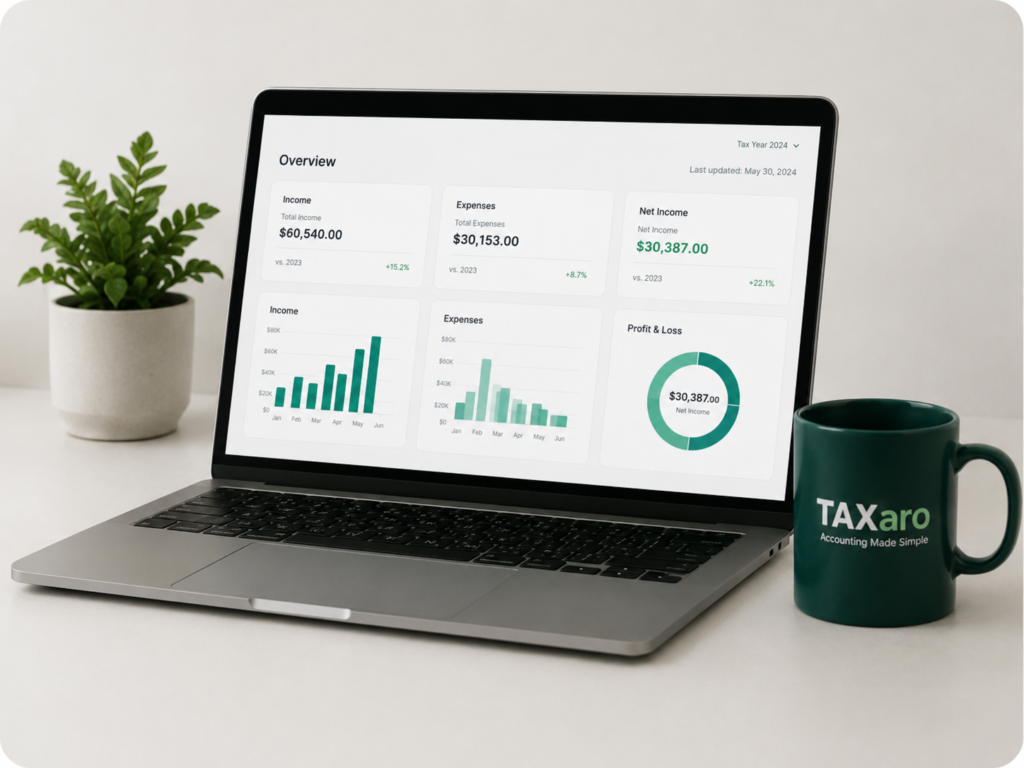
Bookkeeping helps UAE small businesses track income, expenses, cash flow, VAT obligations and Corporate Tax exposure. Without proper records, businesses may struggle to prepare accurate financial statements, file tax returns or understand their true profitability.
Small businesses in the UAE should keep invoices, receipts, bank statements, contracts, payroll records and financial reports organised throughout the year.
For Corporate Tax purposes, relevant records generally need to be retained for at least 7 years after the end of the relevant tax period.
What is bookkeeping?
Short answer: Bookkeeping is the process of recording and organising a company’s financial transactions, including sales, expenses, payments, receipts, assets and liabilities.
Bookkeeping gives a business a clear financial record of what happened during a specific period. It shows how much money came in, how much money went out and whether the business is actually profitable.
For a small business, bookkeeping is not only about compliance. It is the foundation for better decisions. Without accurate records, founders often rely on bank balances instead of real financial performance.
A bank balance can look healthy while unpaid bills, VAT liabilities or future Corporate Tax obligations are building up in the background.
Why is bookkeeping important for small businesses in the UAE?
Short answer: Bookkeeping is important because it helps UAE small businesses stay compliant, understand profitability, manage cash flow and prepare for VAT and Corporate Tax obligations.
Important: Bookkeeping should not start when a tax deadline is close. If records are updated only at year end, missing invoices, unreconciled payments and unsupported expenses can create serious compliance risks.
The UAE business environment has become more compliance focused. Small businesses are expected to maintain proper records, understand their tax position and file accurate returns where required.
Clean bookkeeping helps business owners answer basic but important questions. Is the business profitable? Which expenses are increasing? Are customers paying on time? Is VAT payable? Is Corporate Tax exposure building up?
Without bookkeeping, these questions become guesswork.
What records should UAE small businesses keep?
Short answer: UAE small businesses should keep records that support their income, expenses, bank movements, tax position and financial statements.
Important: For Corporate Tax, relevant records generally need to be retained for at least 7 years after the end of the tax period. Businesses should not rely only on WhatsApp messages, screenshots or memory as proof of transactions.
In practice, this includes sales invoices, purchase invoices, receipts, bank statements, contracts, payment confirmations, payroll records, loan agreements, asset records and accounting reports.
The exact documents depend on the business model. A consultancy may mainly need invoices, contracts and bank records. An ecommerce business may also need payment gateway reports, refund records and inventory related documents. A short term rental business may need booking reports, platform statements, cleaning costs, maintenance invoices and occupancy related records.
The practical rule is simple: if a transaction affects your revenue, cost, assets, liabilities or tax position, you should be able to prove it with documentation.
How does bookkeeping support Corporate Tax compliance?
Short answer: Bookkeeping supports Corporate Tax compliance because taxable income starts with accounting profit, adjusted under the UAE Corporate Tax rules where required.
Important: A business may have no Corporate Tax payable and still have compliance obligations. Clean bookkeeping is still needed to support the Tax Return and explain the financial position if required.
Corporate Tax is based on profit, not simply on money in the bank. This means businesses need proper financial records to calculate revenue, deductible expenses, accounting profit and taxable income.
If bookkeeping is inaccurate, the Corporate Tax calculation can also be inaccurate. Missing revenue, unsupported expenses, mixed personal costs or incorrect bank reconciliations may all affect the tax position.
Bookkeeping also helps businesses understand whether they may have tax payable, whether Small Business Relief could be relevant and whether they are ready to file their Corporate Tax Return.
How does bookkeeping support VAT compliance?
Short answer: Bookkeeping supports VAT compliance by tracking taxable sales, input VAT, output VAT, tax invoices and VAT return data.
Important: VAT and Corporate Tax are separate obligations. Being registered for VAT does not remove Corporate Tax obligations, and Corporate Tax registration does not replace VAT compliance.
VAT is different from Corporate Tax. VAT is a transaction based indirect tax, while Corporate Tax is based on taxable business profits. A business may need to monitor both.
For VAT registered businesses, bookkeeping should clearly separate taxable sales, exempt income, zero rated supplies where relevant, recoverable input VAT and non recoverable input VAT.
Good bookkeeping also helps businesses avoid common VAT problems such as missing tax invoices, claiming VAT without proper support, forgetting reverse charge entries or confusing gross and net amounts.
What should a monthly bookkeeping process include?
Short answer: A monthly bookkeeping process should include collecting documents, recording transactions, reconciling bank accounts and reviewing financial reports.
Important: Monthly bookkeeping is easier and safer than fixing records at year end. Missing invoices, unclear payments and bookkeeping errors become harder to correct over time.
A simple monthly process helps small businesses keep records accurate and ready for VAT, Corporate Tax and management reporting. Each month, the business should collect invoices, receipts, bank statements and payment confirmations. Transactions should then be recorded correctly and reconciled with the bank account.
After that, the business should review a profit and loss report to understand revenue, costs, profitability and possible tax exposure.
What are the most common bookkeeping mistakes?
Short answer: Common bookkeeping mistakes include mixing personal and business expenses, delaying record keeping, missing invoices, ignoring bank reconciliation and relying only on bank balance.
Important: The bank balance is not the same as profit. A company can have cash in the bank but still have unpaid bills, tax liabilities or expenses that have not yet been recorded.
One of the biggest mistakes is using personal bank accounts for business transactions. This creates confusion and makes it harder to prove which expenses belong to the company.
Another common mistake is recording income but not recording all expenses. This can overstate profit and distort the business view.
Some founders also assume that bookkeeping is only needed when they are VAT registered or profitable. That is risky. Even a small or early stage business needs clean records if it wants to stay compliant and understand performance.
Do Free Zone companies need bookkeeping?
Short answer: Yes, Free Zone companies should maintain proper bookkeeping records, even if they expect to benefit from 0% Corporate Tax on qualifying income.
Important: Free Zone does not automatically mean tax free. A Free Zone company should still keep organised records and understand its Corporate Tax position.
A Free Zone license does not remove the need for accounting. Free Zone companies may still need to register for Corporate Tax, prepare financial statements and file tax returns.
For Free Zone companies, bookkeeping is especially important because the tax treatment may depend on the type of income, customer location, business activity and whether the company meets the relevant conditions.
Without proper records, it becomes difficult to prove what income was earned, where it came from and whether it qualifies for a specific tax treatment.
When should a small business work with an accountant?
Short answer: A small business should work with an accountant when transactions become regular, VAT registration becomes relevant, Corporate Tax filing is approaching or financial reports are needed for decision making.
Important: Cheap bookkeeping becomes expensive if it creates inaccurate reports, missed tax positions or cleanup work before filing deadlines.
Many founders wait until they are overwhelmed. That is usually too late. An accountant can help set up the chart of accounts, organise documents, reconcile bank accounts, prepare monthly reports, review VAT data and support Corporate Tax filing.
The right time to get help is before records become messy, not after.
Final thoughts on bookkeeping for UAE small businesses
Short answer: Bookkeeping is one of the most important financial habits for any serious small business in the UAE.
The UAE remains an attractive place to start and grow a business, but the compliance standard has increased.
Small businesses now need more than a trade license and a bank account. They need accurate records, organised documents, monthly financial visibility and a clear understanding of VAT and Corporate Tax obligations.
Good bookkeeping helps founders stay in control. It reduces stress, improves decision making and makes tax compliance easier.
If you run a small business in Dubai or anywhere in the UAE, Taxaro Accounting & Advisory can help you set up reliable bookkeeping, prepare monthly financial reports and stay ready for VAT and Corporate Tax compliance.
Frequently asked questions about our services
Do small businesses in the UAE need bookkeeping?
Yes. Small businesses need bookkeeping to track income, expenses, cash flow, VAT obligations and Corporate Tax exposure. Even if no tax is payable, proper records may still be required.
How often should bookkeeping be updated?
Monthly bookkeeping is usually the best approach for small businesses. It keeps records current, reduces year end cleanup and gives founders better financial visibility.
Is bookkeeping required for Corporate Tax in the UAE?
Corporate Tax compliance relies on accurate financial records. Businesses need bookkeeping to calculate accounting profit, taxable income and support the information included in their Tax Return.
What documents should I keep for bookkeeping?
Businesses should generally keep invoices, receipts, bank statements, contracts, payroll records, payment confirmations, asset records and financial reports.
Do Free Zone companies need bookkeeping?
Yes. Free Zone companies should maintain bookkeeping records and understand their Corporate Tax position. A Free Zone license does not automatically remove compliance obligations.
Is bookkeeping the same as accounting?
No. Bookkeeping records and organises transactions. Accounting uses those records to prepare reports, review performance, support tax filings and provide financial insight.